The PAST SIMPLE expresses an action in the past taking place once, never, several times. It can also be used for actions taking place one after another or in the middle of another action.
Form of Simple Past
Positive
Negative
Question
no differences
I spoke.
I did not speak.
Did I speak?
For irregular verbs, use the past form (see list of irregular verbs, 2nd column). For regular verbs, just add “ed”.
Exceptions in Spelling when Adding ‘ed’
Exceptions in spelling when adding ed
Example
after a final e only add d
love – loved
final consonant after a short, stressed vowel or l as final consonant after a vowel is doubled
admit – admitted travel – travelled
final y after a consonant becomes i
hurry – hurried
Use of Simple Past
action in the past taking place once, never or several times
Example: He visited his parents every weekend.
actions in the past taking place one after the other
Example: He came in, took off his coat and sat down.
action in the past taking place in the middle of another action
Example: When I was having breakfast, the phone suddenly rang.
if sentences type II (If I talked, …)
Example: If I had a lot of money, I would share it with you.
Signal Words of Simple Past
yesterday, 2 minutes ago, in 1990, the other day, last Friday
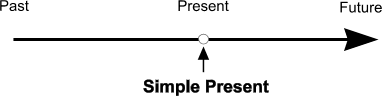
The simple present expresses an action in the present taking place regularly, never or several times. It is also used for actions that take place one after another and for actions that are set by a timetable or schedule. The simple present also expresses facts in the present.
be
Use:
am with the personal pronoun II
is with the personal pronouns he, she or it (or with the singular form of nouns)
are with the personal pronouns we, you or they (or with the plural form of nouns)
example: I am hungry.
affirmative
negative
question
I
I am.
I am not.
Am I?
he/she/it
He is.
He is not.
Is he?
you/we/they
You are.
You are not.
Are you?
facts (something is generally known to be true)
The sun sets in the west.
The sun never sets in the east or south or north, but always in the west.
verbs expressing states, possession, senses, emotions and mental activity
I love her.
When you love someone, that's a state, a fact or emotion, but not an action (like running for example). Whenever you want to express a state, possession, sense or emotions, use the simple form (not the progressive). The following words all belong to this group:
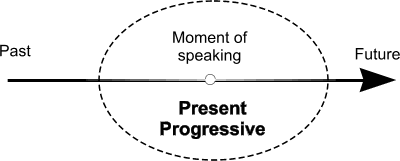
The present progressive/continuous puts emphasis on the course or duration of an action.
The present progressive is used for actions going on in the moment of speaking and for actions taking place only for a short period of time. It is also used to express development and actions that are arranged for the near future.
Present progressive is also known as present continuous. Use a form of to be and the infinite verb plus -ing.
Use:
am with the personal pronoun I
is with the personal pronouns he, she or it (or the singular form of nouns)
are with the personal pronouns you, we, they (or the plural form of nouns)
affirmative
negative
question
I
I am playing.
I am not playing.
Am I playing?
he, she, it
He is playing.
He is not playing.
Is he playing?
you, we, they
You are playing.
You are not playing.
Are you playing?
Tips on how to form negative sentences and questions
In negative sentences, we put not between the form of be and the verb.
In questions, we simply swop the places of subject and the form of be.
A: He would have been speaking. N: He would not have been speaking. Q: Would he have been speaking?
action that might have taken place in the past
puts emphasis on the course / duration of the action
суббота, 16 декабря 2017 г.
ТИПЫ ВОПРОСОВ
В английском языке различают пять типов вопросов. Давайте вместе подробно рассмотрим каждый из них. У каждого из пяти типов вопросительных предложений свой порядок слов, который нужно запомнить, чтобы научиться правильно задавать вопросы.
1. Вопрос к подлежащему
В предложении такого типа мы сохраняем прямой порядок слов, оставляя все члены предложения на своих местах. Нужно только найти подлежащее в предложении и заменить его подходящим вопросительным словом, т.е. вопросом, на который и отвечает подлежащее : либо Who? –кто?, либо What? –что? Вопрос к подлежащему не требует использования вспомогательного глагола в настоящем и прошедшем времени. Нужно только запомнить, что глагол –сказуемое в настоящем времени принимает форму третьего лица единственного числа.
• What forced you to do this? – Что вынудило вас сделать это? • What made you worry? – Что заставило тебя беспокоиться? • Who works in this office? – Кто работает в этом офисе? • Who travelled to the south? – Кто путешествовал на юг? • Who likes swimming? – кто любит плавать?
2. Общий вопрос
В данном случае вопрос задается ко всему предложению целиком, вопросительного слова в данном случае нет, а ответ всегда однозначный : или «да», или «нет». Вопросы подобного типа известны в английском языке также как «yes / no question». Чтобы перевести подобное предложение с русского на английский нужно запомнить следующий порядок слов: Вспомогательный глагол (в зависимости от числа подлежащего и от того к какому грамматическому времени относится предложение) – подлежащее – сказуемое – второстепенные члены.
• Do you often go shopping? – Yes, I do — Вы часто ходите за покупками? – да • Does she like studying? — No, she doesn’t – Ей нравится учеба? – нет • Is this film interesting? – yes, it is – этот фильм интересный? – да • Are you hungry? — no, I am not — вы голодны? – нет
Обратите внимание как легко поставить общий вопрос к английским повествовательным предложениям. Нужно просто найти подлежащее, подобрать к нему подходящий вспомогательный глагол и поставить в начале предложения.
• We live in a comfortable flat – Do we live in a comfortable flat? • He studies at a college – Does he study at a college? • They usually come here — Do they usually come here? • This student is very prospective – is this student very prospective? • My favorite colors are red and white – are my favorite colors red and white?
3. Альтернативный вопрос
Данный вопрос можно задать к каждому члену предложения и нужно следовать тому же порядку слов что и при постановке общего вопроса, но с одной особенностью – предложение подразумевает выбор между двумя лицами, предметами, действиями или качествами и требует использования союза «или». Давайте поставим альтернативный вопрос к следующему предложению: We finished cooking dinner at 2 o’clock – мы закончили готовить обед в 2 часа.
• Did we finish cooking dinner at 2 or 3 o’clock? – мы закончили готовить обед в 2 или 3 часа? • Did we finish cooking or eating dinner 2 o’clock? – мы закончили готовить или есть обед в 2 часа?
4. Специальный вопрос
Специальный вопрос задается к любому члену английского предложения и требует использование вопросительного слова, а порядок слов также является обратным: на первом месте вопросительное слово (When? What? Where? и т.п.) – вспомогательный глагол (в зависимости от числа подлежащего и от того к какому грамматическому времени относится предложение) – подлежащее – сказуемое – второстепенные члены.
• When does your lesson begin? – Когда начинается ваш урок? • What are you doing here? – Что вы здесь делаете? • When did you buy this vase? – Когда вы купили эту вазу?
5. Разделительный вопрос
Наличие подобного вопроса в английском языке позволяет ненавязчиво спросить об интересующих вещах, а в добавок выразить либо сомнение, удивление, или подтвердить сказанное. На русский язык подобный оборот переводится «не так ли? , не правда ли?». Подобный вопрос делится на две части: первая часть – само предложение без изменения порядка слов, вторая часть – вопрос, состоящий только из вспомогательного глагола, относящегося к грамматическому времени предложения, и подлежащего. Если предложение утвердительное, то вторая часть –вопрос будет отрицательным, а если предложение отрицательное, то наоборот, вопрос не будет содержать отрицания.
• Your sister is a student, isn’t she? – ваша сестра студент, не так ли? • You are not busy, are you? – вы не заняты, не правда ли? • He goes to bed very late, does not he? — он ложится очень поздно, да? • She doesn’t eat meat, does she? – она не ест мясо, не так ли?