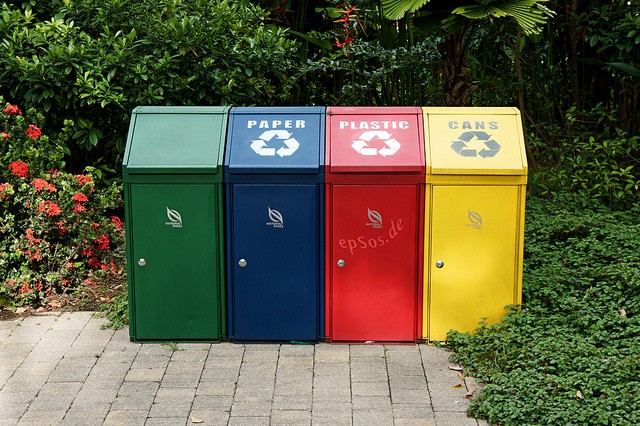
The severity of pollution depends on chemical nature and concentration of these pollutants in the environment. There are different types of pollution; the major ones being air pollution, water pollution, and land pollution. Irrespective of which part of the world we are talking about, each of these three types have different causes, and therefore, they have to be discussed individually.
Look the video and be ready to discuss the problem!!!
суббота, 17 декабря 2016 г.
Below are 40 facts about Recycling
Fact 1: Recycling is a process to create new items from old and used materials. This helps in reducing energy and potentially useful materials from being wasted.
Fact 2:Recycling is a part of waste disposal hierarchy – Reduce, Reuse, Recycle.
Fact 3: Aluminium cans can actually be recycled and put back onto the shelf at your local grocery store in just about 2 months.
Fact 4: Aluminium cans are probably the most recycled item, at least in the United States. While this is true, you can also recycle other forms of aluminium as well.
Fact 5: Recycling an aluminium can help to save a great deal of energy, in fact, enough to run your home television for about three hours!
Fact 6: Most beverage cans are made up of aluminium, even though there are other products that go into it as well.
Fact 7: If you throw away your aluminium cans, they can stay in that can form for up to 500 years or more- so recycling is the way to go.
Fact 8: Variety of raw materials including paper, plastic, metal, glass, electronics and textiles can be recycled.
Fact 9: You can recycle aluminium over and over again, and there is really no limit to it.
Fact 10: There are over 80 billion aluminium cans used each and every year around the world.
Fact 11: Aluminium used to be more valuable than gold, many years ago.
Fact 12: Half a million trees have to be cut down just to produce the Sunday newspapers each week.
Fact 13: Recycling a single days worth of the New York Times could save 75,000 trees or more.
Fact 14: Recycling helps to conserve our natural resources like coal, oil and gas.
Fact 15: If we recycled all newspapers, we could save over 250 million trees each and every year.
Fact 16: Most people in America all use at least seven trees each year, through wood, paper and other types of products that use trees. That is over 2 trillion trees throughout the course of the year when you think about it.
Fact 17: Each American uses around 680 pounds of paper each year, and most people just throw it away instead of recycling it for further use.
Fact 18: 2000 pounds of recycled paper can actually help to save 17 trees, over 350 gallons of oil, and a lot of landfill space. That also means less air pollution!
Fact 19: Recycling helps to conserve energy and as a result less greenhouse gases are emitted.
Fact 20: Americans will use over 2 and a half million plastic bottles every thirty minutes, and most of them are simply thrown away rather than recycled.
Fact 21: Plastic bags that are thrown into the ocean kill over a million sea creatures a year.
Fact 22: Over 60% of the trash that ends in dustbin could be recycled.
Fact 23: Over 25 trillion Styrofoam coffee cups are thrown away each year, just by Americans!
Fact 24: Glass jars can be recycled, but there are many that are just thrown away.
Fact 25: 24 trees are cut down to make 1 ton of newspaper.
Fact 26: Recycling helps to reduce the amount of waste that goes to landfills and as a result less harmful emissions like methane gas are released into the earth’s atmosphere.
Fact 27: A modern glass bottle could take over 4000 years to actually decompose, and if it is in the landfill then it will probably take even longer than that.
Fact 28: Most dumps are made up of a third of packaging materials that could be recycled.
Fact 29:Recycled paper produces approximately 70% less air pollution than if it was made from raw materials.
Fact 30: Each year, there are organic garbage thrown out that could be composted and recycled to use for fertilizer for the ground rather than pollutants.
Fact 31: Glass is 100% recyclable and can be used again and again. Glass recycling is separated into colors because glass retains its color even after recycling.
Fact 32: The most thrown away products in American include diapers, pens, razor blades, tires and aluminium- all of which can be used to be recycled into other products.
Fact 33: Due to the fact that people aren’t recycling as much as they should, the rainforests are actually be cut down by about 100 acres a minute.
Fact 34: Most people produce 4.4 pounds of trash per day that results in about 1.5 tons of solid waste per year.
Fact 35: Plastic bags and garbage that are thrown into the ocean have devastating effect on sea animals.
Fact 36: Approximately 1 billion trees worth of paper are thrown in US every year.
Fact 37: The amount of wood and paper that are thrown each year is enough to heat 50,000,000 homes for 20 years.
Fact 38: Recycling one ton of plastic can save up to 1,000–2,000 gallons of gasoline.
Fact 39: Recycling one glass bottle saves enough energy to power a 100-watt bulb for four hours.
Fact 40: One drip one second from a leaky faucet wastes 540 gallons of water a year.
As you can see, there is a lot of great information out there about recycling. If you have never considered recycling, or have thought about it and thought that it would really not be worth your while, you may want to think again. It can actually help to save you money in the long run, but more importantly it is great for the environment. It doesn’t take too much extra effort on your part, and if more people would do it then the world would be a much cleaner place to be.
It is clear that people need to do their part, especially if they want to work toward a sustainable planet that will be around for many more years to come. It is clear that we aren’t doing enough to take care of the planet, which is why we really need to learn more about recycling.
“An environmental disaster is a disaster to the natural environment due to human activity, which distinguishes it from the concept of a natural disaster. It is also distinct from intentional acts of war such as nuclear bombings.”
Some information about disasters caused by humans:
Our environment is constantly changing. There is no denying that. However, as our environment changes, so does the need to become increasingly aware of the problems that surround it. With a massive influx of natural disasters, warming and cooling periods, different types of weather patterns and much more, people need to be aware of what types of environmental problems our planet is facing.
Global warming has become an undisputed fact about our current livelihoods; our planet is warming up and we are definitely part of the problem. However, this isn’t the only environmental problem that we should be concerned about. All across the world, people are facing a wealth of new and challenging environmental problems every day. Some of them are small and only affect a few ecosystems, but others are drastically changing the landscape of what we already know.
Our planet is poised at the brink of a severe environmental crisis. Current environmental problems make us vulnerable to disasters and tragedies, now and in the future. We are in a state of planetary emergency, with environmental problems piling up high around us. Unless we address the various issues prudently and seriously we are surely doomed for disaster. Current environmental problems require urgent attention.
Britain is like a 'melting-pot' (плавильный котел) - it is multicultural. Different countries have helped build Britain into an exciting place today. Britain has become a 'new' home or a shelter for those people who come different backgrounds and often difficult times from their home countries. The ethnic and cultural diversity adds great value to Britain.
Britain has some traditions and customs that show the typical 'way of life' for British peoples. Not everyone does them, but many do.
Sunday Roast (воскресное жаркое (из говядины или баранины, традиционное воскресное блюдо; готовится в духовке, подаётся на стол с картошкой и овощами)). Roast beef is served with roast potatoes, Yorkshire pudding, vegetables and gravy. It is usually served on a Sunday, mid to late afternoon.
Yorkshire pudding is batter baked in hot fat in the oven. Gravy is a sauce made from meat juices and stock, thickened with flour.
High Tea ("большой чай", ранний ужин с чаем (распространён на севере Англии и в Шотландии)). The modern High Tea is served between 3pm and 5pm. It is a pot of tea usually accompanied by thin sandwiches, scones with cream, small cakes, and pastries. High tea can also be called 'afternoon tea' which can be as simple as a cup of tea (a cuppa) and biscuits.
Fish and Chips (рыба с картофелем во фритюре (треска или камбала; популярное дешёвое блюдо; подаётся в небольших специализированных кафе; если покупатель берёт рыбу с собой, она, по традиции, завёртывается в газетную бумагу)). Friday Fish and chips can, and are, eaten any day of the week. Fridays became the 'traditional' day to eat them due to a Roman Catholic rule that fish was the only meat to be eaten on a Friday.
There are many superstitions in Britain, but one of the most widely-held is that it is unlucky to walk under a ladder - even if it means stepping off the pavement into a busy street! If you must pass under a ladder you can avoid bad luck by crossing your fingers and keeping them crossed until you've seen a dog. Alternatively, you must lick your finger and make a cross on the toe of your shoe, and not look again at the shoe until the mark has dried.
Another common superstition is that it is unlucky to open an umbrella in the house - it will either bring misfortune to the person that opened it or to the household. Anyone opening an umbrella in fine weather is unpopular, as it inevitably brings rain!
The number 13 is said to be unlucky for some, and when the 13th day of the month falls on a Friday, anyone wishing to avoid an inauspicious event had better stay indoors.
The worst misfortune that can befall you is incurred by breaking a mirror, as it brings seven years of bad luck! The superstition is supposed to have originated in ancient times, when mirrors were considered to be tools of the gods.
Black cats are generally considered lucky in Britain, even though they are associated with witchcraft - a witch's animal-familiar' is usually a black cat. It is especially lucky if a black cat crosses your path.
A commonly-held superstition is that of touching wood for luck. This measure is most often taken if you think you have said something that is tempting fate, such as 'my car has never broken down - touch wood!'
Holidays in America
Ответьте на вопросы:
1.What national celebrations in the US do you know?
2.What is your favorite national celebration?
3.Would you like to take part in any foreign national celebration?
Americans share three national holidays with many countries: Easter Sunday, Christmas Day, and New Year's Day.
Easter, which falls on a spring Sunday that varies from year to year, celebrates the Christian belief in the resurrection of Jesus Christ. For Christians, Easter is a day of religious services and the gathering of family. Many Americans follow old traditions of coloring hard-boiled eggs and giving children baskets of candy.
Christmas Day, December 25, is another Christian holiday; it marks the birth of the Christ Child. Decorating houses and yards with lights, putting up Christmas trees, giving gifts, and sending greeting cards have become traditions even for many non-Christian Americans.
New Year's Day, of course, is January 1. The celebration of this holiday begins the night before, when Americans gather to wish each other a happy and prosperous coming year.
Uniquely American Holidays
Eight other holidays are uniquely American (although some of them have counterparts in other nations). For most Americans, two of these stand out above the others as occasions to cherish national origins: Thanksgiving and the Fourth of July.
Thanksgiving Day is the fourth Thursday in November. The holiday dates back to 1621, the year after the Puritans arrived in Massachusetts, determined to practice their dissenting religion without interference.
After a rough winter, in which about half of them died, they turned for help to neighboring Indians, who taught them how to plant corn and other crops. The next fall's bountiful harvest inspired the Pilgrims to give thanks by holding a feast. The Thanksgiving feast became a national tradition.To this day, Thanksgiving dinner almost always includes some of the foods served at the first feast: roast turkey, cranberry sauce, potatoes, pumpkin pie. Before the meal begins, families or friends usually pause to give thanks for their blessings, including the joy of being united for the occasion.
The Fourth of July, or Independence Day, honors the nation's birthday - the signing of the Declaration of Independence on July 4, 1776. It is a day of picnics and patriotic parades, a night of concerts and fireworks.
Besides Thanksgiving and the Fourth of July, there are six other uniquely American holidays: Martin Luther King Day, Presidents' Day, Memorial Day, Columbus Day, Veterans Day. While not holidays, two other days of the year inspire colorful celebrations in the United States: February 14, Valentine's Day, and October 31, Halloween.
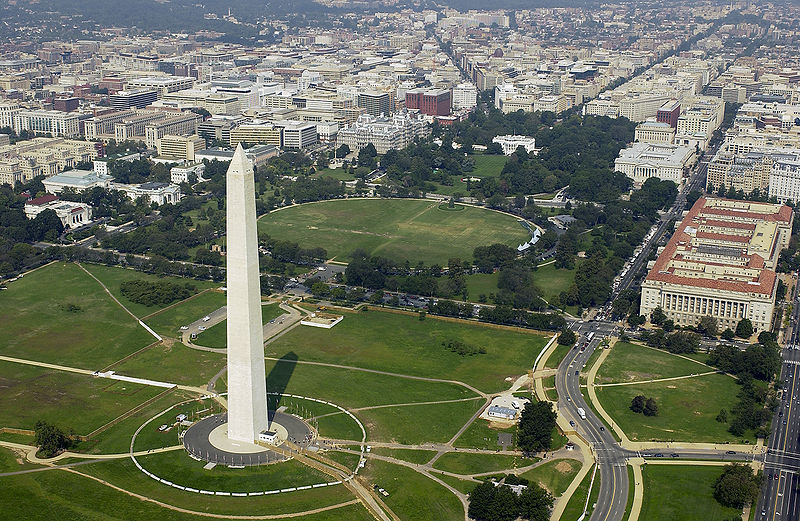
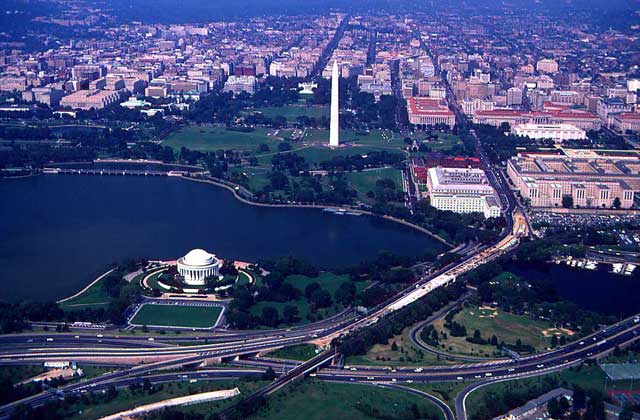
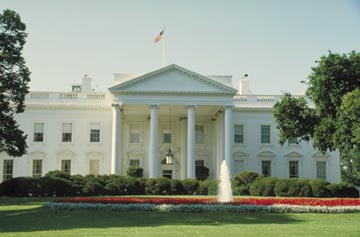
Washington, D.C. has a variety of sightsseings that is really hard for a visitor to choose where to start from. The National Mall is a unique National Park, filled with an intense concentration of monuments, memorials, museums, and monumental government buildings instantly recognizable to people all over the world. The White House, the US Capitol Building, the Washington Monument, the Lincoln Memorial and Reflecting Pool, the Franklin Delano Roosevelt Memorial, the Vietnam War Memorial, the Jefferson Memorial, theNational Gallery of Art, the Air and Space Museum and the National Natural History Museum, are just a few of the top national attractions here, all within walking distance of each other.
There are multiple maps along the Mall, especially by Metro stops, but the place is so jam-packed with things you'll want to see that you should probably take a map with you to avoid missing highlights obscured by other highlights. The Mall is larger than it looks, and a walk from the Capitol Building to the Lincoln Memorial or the Tidal Basin will take a while and may wear you down a bit.
While the Mall has more than enough sights to keep a traveler busy for a while, the city itself has plenty of big attractions for a visitor who wants to leave behind the sandy paths and flocks of tourists and pigeons of the Smithsonian. TheNational Zoo in Woodley Park is one of the nation's most prestigious, and the nearby National Cathedral is an awe-inspiring mammoth. Dupont Circle is home to much of Embassy Row, an impressive stretch of some 50 foreign-owned historic and modernist mansions along Massachusetts Ave, as well as several brilliant small museums, such as the Phillips Collection, the Textile Museum, and the Woodrow Wilson House. The historic neighborhood of Georgetown is another great sightseeing destination, full of beautiful old colonial buildings, the 200+ year-old Jesuit campus of Georgetown University, a pleasant waterfront, and the infamous Exorcist steps.
Look the video once again and write out the vocabulary.
Be ready to speak about education in Russia and in USA!!!
Some interesting information:
среда, 21 мая 2014 г.
NUCLEAR POWER:
IS NUCLEAR POWER A GOOD CHOICE?
Nuclear power, or nuclear energy, is the use of exothermic nuclear processes, to generate useful heat and electricity. The term includes nuclear fission, nuclear decay and nuclear fusion. Presently the nuclear fission of elements in the actinide series of the periodic table produce the vast majority of nuclear energy in the direct service of humankind, with nuclear decay processes, primarily in the form of geothermal energy, and radioisotope thermoelectric generators, in niche uses making up the rest. Nuclear (fission) power stations, excluding the contribution from naval nuclear fission reactors, provided about 5.7% of the world's energy and 13% of the world's electricity in 2012. In 2013, the IAEA report that there are 437 operational nuclear power reactors, in 31 countries, although not every reactor is producing electricity. In addition, there are approximately 140 naval vessels using nuclear propulsion in operation, powered by some 180 reactors. As of 2013, attaining a net energy gain from sustained nuclear fusion reactions, excluding natural fusion power sources such as the Sun, remains an ongoing area of international physics and engineering research. More than 60 years after the first attempts, commercial fusion power production remains unlikely before 2050.
There is an ongoing debate about nuclear power. Proponents, such as the World Nuclear Association, the IAEA and Environmentalists for Nuclear Energy contend that nuclear power is a safe, sustainable energy source that reduces carbon emissions. Opponents, such as Greenpeace International and NIRS, contend that nuclear power poses many threats to people and the environment.
Перейдите по ссылке, изучите тему и сделайте презентацию по данной теме:
In Layman terms, Energy is the amount of force or power when applied can move one object from one position to another or Energy defines the capacity of a system to do work. Energy exists in everybody whether they are human beings or animals or non living things for e.g.: Jet, Light, Machines etc..
Energy can have many forms: kinetic, potential, light, sound, gravitational, elastic, electromagnetic or nuclear. According to the law of conservation of energy, any form of energy can be converted into another form and the total energy will remain the same. For eg: a laborer when pushes the pile of bags, his potential energy stored inside him is converted into the kinetic energy from the movement of matter or when you burn the wood, it’s chemical energy is converted into the heat energy or when you charge your mobile phone, the electrical energy is converted into the chemical energy which gets stored inside the battery’s molecules.
The many different natural and renewable energy technologies highlighted throughout the website are by no means breakthrough. Many of the renewable energy technologies have been around for years, and as time goes by, are increasing in efficiency.
What are the Sources of Energy?
Energy is broadly classified into two main groups: Renewable and Non-renewable.
Renewable Energy
Renewable energy is the energy which is generated from natural sources i.e. sun, wind, rain, tides and can be generated again and again as and when required. They are available in plenty and by far most the cleanest sources of energy available on this planet. For eg: energy that we receive from the sun can be used to generate electricity. Similarly, energy from wind, geothermal, biomass from plants, tides can be used to fulfill our daily energy demands.
Here are some of the pros and cons of using renewable sources of energy:-
Pros
The sun, wind, geothermal, ocean energy are available in the abundant quantity and free to use.
The non-renewable sources of energy that we are using are limited and are bound to expire one day.
Renewable sources have low carbon emissions, therefore they are considered as green and environment friendly.
Renewable helps in stimulating the economy and creating job opportunities. The money that is used to build these plants can provide jobs to thousands to lakhs of people.
You don’t have to rely on any third country for the supply of renewable sources as in case of non-renewable sources.
Renewable sources can cost less than consuming the local electrical supply. In the long run, the prices of electricity are expected to soar since they are based on the prices of crude oil, so renewable sources can cut your electricity bills.
Various tax incentives in the form of tax waivers, credit deductions are available for individuals and businesses who want to go green.
Cons
It is not easy to set up a plant as the initial costs are quite steep.
Solar energy can be used during the day time and not during night or rainy season.
Geothermal energy which can be used to generate electricity has side effects too. It can bring toxic chemicals beneath the earth surface onto the top and can create environmental changes.
Hydroelectric provide pure form of energy but building dams across the river which is quite expensive can affect natural flow and affect wildlife.
To use wind energy, you have to rely on strong winds therefore you have to choose suitable site to operate them. Also, they can affect bird population as they are quite high.
Non-Renewable Energy
Non-Renewable energy is the energy which is taken from the sources that are available on the earth in limited quantity and will vanish fifty-sixty years from now. Non-renewable sources are not environmental friendly and can have serious affect on our health. They are called non-renewable because they cannot be re-generated within a short span of time. Non-renewable sources exist in the form of fossil fuels, natural gas, oil and coal.
Here are some of the pros and cons of using non-renewable sources of energy:-
Pros
Non-renewable sources are cheap and easy to use. You can easily fill up your car tank and power your motor vehicle.
You can use small amount of nuclear energy to produce large amount of power.
Non-renewable have little or no competition at all. For eg: if you are driving a battery driven car your battery gets discharged then you won’t be able to charge it in the middle if the road rather it is easy to find a gas pumping station.
They are considered as cheap when converting from one type of energy to another.
Cons
Non-renewable sources will expire some day and we have to us our endangered resources to create more non-renewable sources of energy.
The speed at which such resources are being utilized can have serious environmental changes.
Non-renewable sources release toxic gases in the air when burnt which are the major cause for global warming.
Since these sources are going to expire soon, prices of these sources are soaring day by day.
Why Should we Conserve Energy?
Energy needs to be conserved to protect our environment from drastic changes, to save the depleting resources for our future generations.The rate at which the energy is being produced and consumed can damage our world in many ways. In other words, it helps us to save the environment. We can reduce those impacts by consuming less energy.The cost of energy is rising every year. It is important for us to realize how energy is useful to us and how can we avoid it getting wasted.
To start saving energy is not a big thing at all. We can start saving the energy from our home itself, just by turning off the lights during day hours, washing clothes in cold water or using public transport instead of using our own vehicle and later can implement these things on much wider scale at society level, then at city level then district level and finally at country level. You might notice a small change in your monthly bills by implementing these changes as they would be getting decreased more and more.With so many alternatives and so many techniques about there, if millions of people like us start doing these things, it will help us to save much more money and also help the environment.
!!! Выполните проект/презентацию на данную тему
суббота, 26 апреля 2014 г.
PRESENT CONTINUOUS TENSE
LOOK AND REMEMBER:
LOOK THE VIDEO AND TRANSLATE THE SENTENCES WITH PRESENT CONTINUOUS :
LOOK THE VIDEOES AND MAKE SOME DIALOGUES:
WRITE OUT THE WORD EXPRESSIONS WITH PRESENT CONTINUOUS :
All living and non-living things (biotic element )in a given area that interact with one other, make up an ecosystem. The non-living part of an ecosystem includes water, rocks, air, light, and soil. All the different organisms that live together in an ecosystem is called a community. Each ecosystem has its own community. A terrarium community, for example, can have small animals. A desert community may have cacti, small snakes, and scorpions. A pond community can have frogs, insects, snakes, and plants, and a forest community may have rabbits, foxes and pine trees. Communities are also divided into populations. A population is composed of only one type of species. A species is a group of similar organisms; for instance, all humans belong to the same species.
An example of an ecosystem
A community works like a team. Each member of the team has its own job to do but they are all interconnected. For example, in a forest community there are different populations, such as grass, rabbits, and foxes. The rabbits eat the grass. The foxes eat the rabbits. If there were no foxes, the rabbit population would grow too quickly and there wouldn't be enough grass for all of the rabbits to eat. Then the rabbits would begin to die, and the foxes would soon die because there is nothing but grass too eat. Predators and their prey are in every community. They help to keep it balanced so that all the members can survive. Three types of team members in a community help establish balance: the Producers, the Consumers, and the Decomposers.
The current cycle of global warming is changing the rhythms of climate that all living things have come to rely upon. What will we do to slow this warming? How will we cope with the changes we've already set into motion? While we struggle to figure it all out, the face of the Earth as we know it—coasts, forests, farms, and snowcapped mountains—hangs in the balance.
The planet is warming, from North Pole to South Pole, and everywhere in between. Globally, the mercury is already up more than 1 degree Fahrenheit (0.8 degree Celsius), and even more in sensitive polar regions. And the effects of rising temperatures aren’t waiting for some far-flung future. They’re happening right now. Signs are appearing all over, and some of them are surprising. The heat is not only melting glaciers and sea ice, it’s also shifting precipitation patterns and setting animals on the move.
Some impacts from increasing temperatures are already happening.
Ice is melting worldwide, especially at the Earth’s poles. This includes mountain glaciers, ice sheets covering West Antarctica and Greenland, and Arctic sea ice.
Researcher Bill Fraser has tracked the decline of the Adélie penguins on Antarctica, where their numbers have fallen from 32,000 breeding pairs to 11,000 in 30 years.
Sea level rise became faster over the last century.
Some butterflies, foxes, and alpine plants have moved farther north or to higher, cooler areas.
Precipitation (rain and snowfall) has increased across the globe, on average.
Spruce bark beetles have boomed in Alaska thanks to 20 years of warm summers. The insects have chewed up 4 million acres of spruce trees.
Other effects could happen later this century, if warming continues.
Sea levels are expected to rise between 7 and 23 inches (18 and 59 centimeters) by the end of the century, and continued melting at the poles could add between 4 and 8 inches (10 to 20 centimeters).
Hurricanes and other storms are likely to become stronger.
Species that depend on one another may become out of sync. For example, plants could bloom earlier than their pollinating insects become active.
Floods and droughts will become more common. Rainfall in Ethiopia, where droughts are already common, could decline by 10 percent over the next 50 years.
Less fresh water will be available. If the Quelccaya ice cap in Peru continues to melt at its current rate, it will be gone by 2100, leaving thousands of people who rely on it for drinking water and electricity without a source of either.
Some diseases will spread, such as malaria carried by mosquitoes.
Ecosystems will change—some species will move farther north or become more successful; others won’t be able to move and could become extinct. Wildlife research scientist Martyn Obbard has found that since the mid-1980s, with less ice on which to live and fish for food, polar bears have gotten considerably skinnier. Polar bear biologist Ian Stirling has found a similar pattern in Hudson Bay. He fears that if sea ice disappears, the polar bears will as well.
Подготовьте устный доклад на тему: "Ecosystem effects"