Показаны сообщения с ярлыком for the second-year students. Показать все сообщения

пятница, 7 апреля 2017 г.


Causes of Pollution

The severity of pollution depends on chemical nature and concentration of these pollutants in the environment. There are different types of pollution; the major ones being air pollution, water pollution, and land pollution. Irrespective of which part of the world we are talking about, each of these three types have different causes, and therefore, they have to be discussed individually.

Read more at Buzzle: http://www.buzzle.com/articles/causes-of-pollution.html


Look the video and be ready to discuss the problem!!!


суббота, 17 декабря 2016 г.


Below are 40 facts about Recycling

Fact 1: Recycling is a process to create new items from old and used materials. This helps in reducing energy and potentially useful materials from being wasted.
Fact 2: Recycling is a part of waste disposal hierarchy – Reduce, Reuse, Recycle.
Fact 3: Aluminium cans can actually be recycled and put back onto the shelf at your local grocery store in just about 2 months.
Fact 4: Aluminium cans are probably the most recycled item, at least in the United States. While this is true, you can also recycle other forms of aluminium as well.
Fact 5: Recycling an aluminium can help to save a great deal of energy, in fact, enough to run your home television for about three hours!
Fact 6: Most beverage cans are made up of aluminium, even though there are other products that go into it as well.
Fact 7: If you throw away your aluminium cans, they can stay in that can form for up to 500 years or more- so recycling is the way to go.
Fact 8: Variety of raw materials including paper, plastic, metal, glass, electronics and textiles can be recycled.
Fact 9: You can recycle aluminium over and over again, and there is really no limit to it.
Fact 10: There are over 80 billion aluminium cans used each and every year around the world.
Fact 11: Aluminium used to be more valuable than gold, many years ago.
Fact 12: Half a million trees have to be cut down just to produce the Sunday newspapers each week.
Fact 13: Recycling a single days worth of the New York Times could save 75,000 trees or more.
Fact 14: Recycling helps to conserve our natural resources like coaloil and gas.
Fact 15: If we recycled all newspapers, we could save over 250 million trees each and every year.
Fact 16: Most people in America all use at least seven trees each year, through wood, paper and other types of products that use trees. That is over 2 trillion trees throughout the course of the year when you think about it.
Fact 17: Each American uses around 680 pounds of paper each year, and most people just throw it away instead of recycling it for further use.
Fact 18: 2000 pounds of recycled paper can actually help to save 17 trees, over 350 gallons of oil, and a lot of landfill space. That also means less air pollution!
Fact 19: Recycling helps to conserve energy and as a result less greenhouse gases are emitted.
Fact 20: Americans will use over 2 and a half million plastic bottles every thirty minutes, and most of them are simply thrown away rather than recycled.
Fact 21: Plastic bags that are thrown into the ocean kill over a million sea creatures a year.
Fact 22: Over 60% of the trash that ends in dustbin could be recycled.
Fact 23: Over 25 trillion Styrofoam coffee cups are thrown away each year, just by Americans!
Fact 24: Glass jars can be recycled, but there are many that are just thrown away.
Fact 25: 24 trees are cut down to make 1 ton of newspaper.
Fact 26: Recycling helps to reduce the amount of waste that goes to landfills and as a result less harmful emissions like methane gas are released into the earth’s atmosphere.
Fact 27: A modern glass bottle could take over 4000 years to actually decompose, and if it is in the landfill then it will probably take even longer than that.
Fact 28: Most dumps are made up of a third of packaging materials that could be recycled.
Fact 29: Recycled paper produces approximately 70% less air pollution than if it was made from raw materials.
Fact 30: Each year, there are organic garbage thrown out that could be composted and recycled to use for fertilizer for the ground rather than pollutants.
Fact 31: Glass is 100% recyclable and can be used again and again. Glass recycling is separated into colors because glass retains its color even after recycling.
Fact 32: The most thrown away products in American include diapers, pens, razor blades, tires and aluminium- all of which can be used to be recycled into other products.
Fact 33: Due to the fact that people aren’t recycling as much as they should, the rainforests are actually be cut down by about 100 acres a minute.
Fact 34: Most people produce 4.4 pounds of trash per day that results in about 1.5 tons of solid waste per year.
Fact 35: Plastic bags and garbage that are thrown into the ocean have devastating effect on sea animals.
Fact 36: Approximately 1 billion trees worth of paper are thrown in US every year.
Fact 37: The amount of wood and paper that are thrown each year is enough to heat 50,000,000 homes for 20 years.
Fact 38: Recycling one ton of plastic can save up to 1,000–2,000 gallons of gasoline.
Fact 39: Recycling one glass bottle saves enough energy to power a 100-watt bulb for four hours.
Fact 40: One drip one second from a leaky faucet wastes 540 gallons of water a year.

As you can see, there is a lot of great information out there about recycling. If you have never considered recycling, or have thought about it and thought that it would really not be worth your while, you may want to think again. It can actually help to save you money in the long run, but more importantly it is great for the environment. It doesn’t take too much extra effort on your part, and if more people would do it then the world would be a much cleaner place to be.
It is clear that people need to do their part, especially if they want to work toward a sustainable planet that will be around for many more years to come. It is clear that we aren’t doing enough to take care of the planet, which is why we really need to learn more about recycling.

INTERESTING FACTS ABOUT RECYCLING!!!


MAN MADE DISASTERS:
An environmental disaster is a disaster to the natural environment due to human activity, which distinguishes it from the concept of a natural disaster. It is also distinct from intentional acts of war such as nuclear bombings.

Some information about disasters caused by humans:


Our environment is constantly changing. There is no denying that. However, as our environment changes, so does the need to become increasingly aware of the problems that surround it. With a massive influx of natural disasters, warming and cooling periods, different types of weather patterns and much more, people need to be aware of what types of environmental problems our planet is facing.
Global warming has become an undisputed fact about our current livelihoods; our planet is warming up and we are definitely part of the problem. However, this isn’t the only environmental problem that we should be concerned about. All across the world, people are facing a wealth of new and challenging environmental problems every day. Some of them are small and only affect a few ecosystems, but others are drastically changing the landscape of what we already know.

Our planet is poised at the brink of a severe environmental crisis. Current environmental problems make us vulnerable to disasters and tragedies, now and in the future. We are in a state of planetary emergency, with environmental problems piling up high around us. Unless we address the various issues prudently and seriously we are surely doomed for disaster. Current environmental problems require urgent attention.


NEWS!


Подготовьте новости на различные темы и обсудите их в вашей группе! Материал найдете по ссылке: http://www.nature.com/news/2016-in-news-the-science-events-that-shaped-the-year-1.21159 

четверг, 26 февраля 2015 г.

DISASTERS


Чтобы узнать все о стихийных бедствиях/natural disasters, ПЕРЕЙДИТЕ ПО ССЫЛКЕ:

Researchers have been studying disasters for more than a century, and for more than forty years disaster research. The studies reflect a common opinion when they argue that all disasters can be seen as being human-made, their reasoning being that human actions before the strike of the hazard can prevent it developing into a disaster. All disasters are hence the result of human failure to introduce appropriate disaster management measures. Hazards are routinely divided into natural or human-made, although complex disasters, where there is no single root cause, are more common in developing countries. A specific disaster may spawn a secondary disaster that increases the impact. A classic example is an earthquake that causes a tsunami, resulting in coastal flooding.

A natural hazard is a natural process or phenomenon that may cause loss of life, injury or other health impacts, property damage, loss of livelihoods and services, social and economic disruption, or environmental damage.
Various phenomena like earthquakes, landslides, volcanic eruptions, floods, hurricanes, tornadoes, blizzards, tsunamis, and cyclones are all natural hazards that kill thousands of people and destroy billions of dollars of habitat and property each year. However, the rapid growth of the world's population and its increased concentration often in hazardous environments has escalated both the frequency and severity of disasters. With the tropical climate and unstable land forms, coupled with deforestation, unplanned growth proliferation, non-engineered constructions which make the disaster-prone areas more vulnerable, tardy communication, and poor or no budgetary allocation for disaster prevention, developing countries suffer more or less chronically from natural disasters. Asia tops the list of casualties caused by natural hazards.

Human-instigated disasters are the consequence of technological hazards. Examples include stampedes, fires, transport accidents, industrial accidents, oil spills and nuclear explosions/radiation. War and deliberate attacks may also be put in this category. As with natural hazards, man-made hazards are events that have not happened—for instance, terrorism. Man-made disasters are examples of specific cases where man-made hazards have become reality in an event.

There are some examples of nayural disasters:


TORNADO

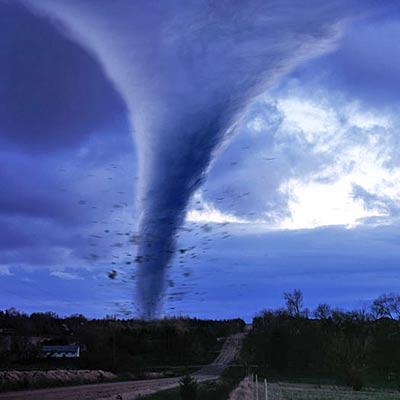
A tornado is a violent, dangerous, rotating column of air that is in contact with both the surface of the earth and a cumulonimbus cloud or, in rare cases, the base of a cumulus cloud. 


EARTHQUAKE:

An earthquake is the result of a sudden release of energy in the Earth's crust that creates seismic waves. At the Earth's surface, earthquakes manifest themselves by vibration, shaking and sometimes displacement of the ground. The vibrations may vary in magnitude. Earthquakes are caused mostly by slippage within geological faults, but also by other events such as volcanic activity, landslides, mine blasts, and nuclear tests.


TSUNAMI
Tsunami is a long high sea wave caused by an earthquake or other disturbance. It Is an extremely large wave caused by a violent movement of the earth under the sea


DROUGHT

Drought is a long period when there is no rain and people do not have enough water. The absence of rain causes fail of crops and death of livestock.


FLOODS

A flood is an overflow of water that submerges land. The EU Floods directive defines a flood as a temporary covering by water of land not normally covered by water.Flooding may result from the volume of water within a body of water, such as a river or lake, which overflows causing the result that some of the water escapes its usual boundaries.


FAMINE 

Famine is a  lack of food for a long time in a particular place. Drought could result in famine throughout the region.


Look the video and retell it:


среда, 11 февраля 2015 г.

RECYCLING

Перейдите по ссылке и проанализируйте информацию:    проблема утилизация мусора
Дайте краткую аннотацию статьи на английском языке
Сделайте собственный анализ поданной теме!


четверг, 4 декабря 2014 г.

English Grammar Lesson: Present Perfect Description

PRESENT PERFECT TENSE
Look the videos and remember when we use Present Perfect Tense:


Это видео для начинающих!

Выполните упражнение:
Present or Past

Choose the most appropriate answer.
1. He ______ to Chicago in 2003.
 has gone
 went
 had gone
2. She ______ to London.
 has never been
 never was
 had never been
3. He was in Japan last month. He ______ Japan before.
 has never visited
 never visited
 had never visited
4. She _______ in this company since 2005.
 is working
 has worked
 was working
 had worked
5. I  ______ to her five minutes ago.
 have talked
 talked
 had talked
6. How long  ______ here?
 are you
 have you been
 were you
 had you been
7. When ______ in New York?
 have you arrived
 did you arrive
 had you arrived
8. He ______ five letters to the manager by the time he finally received an answer.
 has written
 was writing
 had written
9. She ______ a lot of money in that store yesterday.
 has spent
 spent
 had spent
10. Up to now, I ______ any opportunity to check this information.
 don't have
 haven't had
 hadn't had


среда, 21 мая 2014 г.

ECOLOGICAL PROBLEMS
Прочитайте текст и поработайте над презентацией по одной из нижеописанных проблем!
       The Earth is the only planet in the solar system where there is life. If you look down at the Earth from a plane you will see how wonderful our planet is. You will see blue seas and oceans, rivers and lakes, high snow-capped mountains, green forests and fields. For centuries man lived in harmony with nature until industrialization brought human society into conflict with the natural environment. Today, the contradictions between man and nature have acquired a dramatic character. With the development of civilization man’s interference in nature has increased. Every year the world’s industry pollutes the atmosphere with millions of tons of dust and other harmful substances. The seas and rivers are poisoned with industrial waste, chemical and sewage discharge. People who live in big cities are badly affected by harmful discharge from plants and city transport and by the increasing noise level which is as bad for human health as lack of fresh air and clean water. 
    Among the most urgent problems are the ozone layer, acid rains, global warming, toxic pollution of atmosphere, disappearance of forests, contamination of underground waters by chemical elements, destruction of soil in some areas, threat to some flora and fauna representatives, etc. 
     One of the most important pollution problems is the oceans. Many ships sail in the ocean water- fishing ships, some ships carrying people, some carrying oil. If a ship loses some of the oil in the water, or waste from the ships in put into the ocean, the water becomes dirty. Many sea birds die because of the polluted water. Many fish are dying in the sea, others are getting contaminated. Fishermen catch contaminated fish which may be sold in markets, and people may get sick from eating them. Lakes and rivers are becoming polluted, too. Some beaches are dangerous for swimming. 
    Another important problem is air pollution. Cars and factories pollute the air we use. Their fume also destroys the ozone layer which protects the Earth from the dangerous light of the Sun. Aerosols create large “holes” in the ozone layer round the Earth. Burning coal and oil leads to global warming which may bring about a change in the world’s climate. 
    The other problem is that our forests are dying from acid rains. Deforestation, especially destruction of tropical forests, affects the balance of nature in many ways. It kills animals, changes the climate and ecosystem in the world. 
    A person can do some damage to the environment but the greater part of pollution certainly comes from industry. Modern industry production is the main threat to nature. 
Read more in the moodle


Составь собственную схему!!!

NUCLEAR POWER:

IS  NUCLEAR POWER A GOOD CHOICE?
            Nuclear power, or nuclear energy, is the use of exothermic nuclear processes, to generate useful heat and electricity. The term includes nuclear fission, nuclear decay and nuclear fusion. Presently the nuclear fission of elements in the actinide series of the periodic table produce the vast majority of nuclear energy in the direct service of humankind, with nuclear decay processes, primarily in the form of geothermal energy, and radioisotope thermoelectric generators, in niche uses making up the rest. Nuclear (fission) power stations, excluding the contribution from naval nuclear fission reactors, provided about 5.7% of the world's energy and 13% of the world's electricity in 2012. In 2013, the IAEA report that there are 437 operational nuclear power reactors, in 31 countries, although not every reactor is producing electricity. In addition, there are approximately 140 naval vessels using nuclear propulsion in operation, powered by some 180 reactors.             As of 2013, attaining a net energy gain from sustained nuclear fusion reactions, excluding natural fusion power sources such as the Sun, remains an ongoing area of international physics and engineering research. More than 60 years after the first attempts, commercial fusion power production remains unlikely before 2050.
         There is an ongoing debate about nuclear power. Proponents, such as the World Nuclear Association, the IAEA and Environmentalists for Nuclear Energy contend that nuclear power is a safe, sustainable energy source that reduces carbon emissions. Opponents, such as Greenpeace International and NIRS, contend that nuclear power poses many threats to people and the environment.

Перейдите по ссылке, изучите тему и сделайте презентацию по данной теме:
К экзаменационному материалу:  NATURAL SOURCES OF ENERGY

Перейдите по ссылке и просмотрите материал о различных источниках энергии:

What is Energy?

             In Layman terms, Energy is the amount of force or power when applied can move one object from one position to another or Energy defines the capacity of a system to do work. Energy exists in everybody whether they are human beings or animals or non living things for e.g.: Jet, Light, Machines etc..
            Energy can have many forms: kinetic, potential, light, sound, gravitational, elastic, electromagnetic or nuclear. According to the law of conservation of energy, any form of energy can be converted into another form and the total energy will remain the same. For eg: a laborer when pushes the pile of bags, his potential energy stored inside him is converted into the kinetic energy from the movement of matter or when you burn the wood, it’s chemical energy is converted into the heat energy or when you charge your mobile phone, the electrical energy is converted into the chemical energy which gets stored inside the battery’s molecules.
           The many different natural and renewable energy technologies highlighted throughout the website are by no means breakthrough. Many of the renewable energy technologies have been around for years, and as time goes by, are increasing in efficiency.

What are the Sources of Energy?

Energy is broadly classified into two main groups: Renewable and Non-renewable.

Renewable Energy

            Renewable energy is the energy which is generated from natural sources i.e. sun, wind, rain, tides and can be generated again and again as and when required. They are available in plenty and by far most the cleanest sources of energy available on this planet. For eg: energy that we receive from the sun can be used to generate electricity. Similarly, energy from wind, geothermal, biomass from plants, tides can be used to fulfill our daily energy demands.

Here are some of the pros and cons of using renewable sources of energy:-

Pros
  • The sun, wind, geothermal, ocean energy are available in the abundant quantity and free to use.
  • The non-renewable sources of energy that we are using are limited and are bound to expire one day.
  • Renewable sources have low carbon emissions, therefore they are considered as green and environment friendly.
  • Renewable helps in stimulating the economy and creating job opportunities. The money that is used to build these plants can provide jobs to thousands to lakhs of people.
  • You don’t have to rely on any third country for the supply of renewable sources as in case of non-renewable sources.
  • Renewable sources can cost less than consuming the local electrical supply. In the long run, the prices of electricity are expected to soar since they are based on the prices of crude oil, so renewable sources can cut your electricity bills.
  • Various tax incentives in the form of tax waivers, credit deductions are available for individuals and businesses who want to go green.

Cons
  • It is not easy to set up a plant as the initial costs are quite steep.
  • Solar energy can be used during the day time and not during night or rainy season.
  • Geothermal energy which can be used to generate electricity has side effects too. It can bring toxic chemicals beneath the earth surface onto the top and can create environmental changes.
  • Hydroelectric provide pure form of energy but building dams across the river which is quite expensive can affect natural flow and affect wildlife.
  • To use wind energy, you have to rely on strong winds therefore you have to choose suitable site to operate them. Also, they can affect bird population as they are quite high.

Non-Renewable Energy

          Non-Renewable energy is the energy which is taken from the sources that are available on the earth in limited quantity and will vanish fifty-sixty years from now. Non-renewable sources are not environmental friendly and can have serious affect on our health. They are called non-renewable because they cannot be re-generated within a short span of time. Non-renewable sources exist in the form of fossil fuels, natural gas, oil and coal.

Here are some of the pros and cons of using non-renewable sources of energy:-
Pros
  • Non-renewable sources are cheap and easy to use. You can easily fill up your car tank and power your motor vehicle.
  • You can use small amount of nuclear energy to produce large amount of power.
  • Non-renewable have little or no competition at all. For eg: if you are driving a battery driven car your battery gets discharged then you won’t be able to charge it in the middle if the road rather it is easy to find a gas pumping station.
  • They are considered as cheap when converting from one type of energy to another.

Cons
  • Non-renewable sources will expire some day and we have to us our endangered resources to create more non-renewable sources of energy.
  • The speed at which such resources are being utilized can have serious environmental changes.
  • Non-renewable sources release toxic gases in the air when burnt which are the major cause for global warming.
  • Since these sources are going to expire soon, prices of these sources are soaring day by day.

Why Should we Conserve Energy?

       Energy needs to be conserved to protect our environment from drastic changes, to save the depleting resources for our future generations.The rate at which the energy is being produced and consumed can damage our world in many ways. In other words, it helps us to save the environment. We can reduce those impacts by consuming less energy.The cost of energy is rising every year. It is important for us to realize how energy is useful to us and how can we avoid it getting wasted.
        To start saving energy is not a big thing at all. We can start saving the energy from our home itself, just by turning off the lights during day hours, washing clothes in cold water or using public transport instead of using our own vehicle and later can implement these things on much wider scale at society level, then at city level then district level and finally at country level. You might notice a small change in your monthly bills by implementing these changes as they would be getting decreased more and more.With so many alternatives and so many techniques about there, if millions of people like us start doing these things, it will help us to save much more money and also help the environment.

!!! Выполните проект/презентацию на данную тему

вторник, 1 апреля 2014 г.


POLLUTION IMPACT ON THE ECOSYSTEM
All living and non-living things (biotic element )in a given area that interact with one other, make up an ecosystem. The non-living part of an ecosystem includes water, rocks, air, light, and soil. All the different organisms that live together in an ecosystem is called a community. Each ecosystem has its own community. A terrarium community, for example, can have small animals. A desert community may have cacti, small snakes, and scorpions. A pond community can have frogs, insects, snakes, and plants, and a forest community may have rabbits, foxes and pine trees. Communities are also divided into populations. A population is composed of only one type of species. A species is a group of similar organisms; for instance, all humans belong to the same species.
An ecosystem
An example of an ecosystem
A community works like a team. Each member of the team has its own job to do but they are all interconnected. For example, in a forest community there are different populations, such as grass, rabbits, and foxes. The rabbits eat the grass. The foxes eat the rabbits. If there were no foxes, the rabbit population would grow too quickly and there wouldn't be enough grass for all of the rabbits to eat. Then the rabbits would begin to die, and the foxes would soon die because there is nothing but grass too eat. Predators and their prey are in every community. They help to keep it balanced so that all the members can survive. Three types of team members in a community help establish balance: the Producers, the Consumers, and the Decomposers.

        The current cycle of global warming is changing the rhythms of climate that all living things have come to rely upon. What will we do to slow this warming? How will we cope with the changes we've already set into motion? While we struggle to figure it all out, the face of the Earth as we know it—coasts, forests, farms, and snowcapped mountains—hangs in the balance.


The planet is warming, from North Pole to South Pole, and everywhere in between. Globally, the mercury is already up more than 1 degree Fahrenheit (0.8 degree Celsius), and even more in sensitive polar regions. And the effects of rising temperatures aren’t waiting for some far-flung future. They’re happening right now. Signs are appearing all over, and some of them are surprising. The heat is not only melting glaciers and sea ice, it’s also shifting precipitation patterns and setting animals on the move.
Some impacts from increasing temperatures are already happening.
  • Ice is melting worldwide, especially at the Earth’s poles. This includes mountain glaciers, ice sheets covering West Antarctica and Greenland, and Arctic sea ice.
  • Researcher Bill Fraser has tracked the decline of the Adélie penguins on Antarctica, where their numbers have fallen from 32,000 breeding pairs to 11,000 in 30 years.
  • Sea level rise became faster over the last century.
  • Some butterflies, foxes, and alpine plants have moved farther north or to higher, cooler areas.
  • Precipitation (rain and snowfall) has increased across the globe, on average.
  • Spruce bark beetles have boomed in Alaska thanks to 20 years of warm summers. The insects have chewed up 4 million acres of spruce trees.
Other effects could happen later this century, if warming continues.
  • Sea levels are expected to rise between 7 and 23 inches (18 and 59 centimeters) by the end of the century, and continued melting at the poles could add between 4 and 8 inches (10 to 20 centimeters).
  • Hurricanes and other storms are likely to become stronger.
  • Species that depend on one another may become out of sync. For example, plants could bloom earlier than their pollinating insects become active.
  • Floods and droughts will become more common. Rainfall in Ethiopia, where droughts are already common, could decline by 10 percent over the next 50 years.
  • Less fresh water will be available. If the Quelccaya ice cap in Peru continues to melt at its current rate, it will be gone by 2100, leaving thousands of people who rely on it for drinking water and electricity without a source of either.
  • Some diseases will spread, such as malaria carried by mosquitoes.
  • Ecosystems will change—some species will move farther north or become more successful; others won’t be able to move and could become extinct. Wildlife research scientist Martyn Obbard has found that since the mid-1980s, with less ice on which to live and fish for food, polar bears have gotten considerably skinnier.  Polar bear biologist Ian Stirling has found a similar pattern in Hudson Bay.  He fears that if sea ice disappears, the polar bears will as well.
Подготовьте устный доклад на тему: "Ecosystem effects" 

среда, 26 февраля 2014 г.


What are the Effects of Soil Pollution?


The effects of pollution on soil are quite alarming and can cause huge disturbances in the ecological balance and health of living creatures on earth. Some of the most serious soil pollution effects are:


  1. Decrease in soil fertility and therefore decrease in the soil yield. How can one expect contaminated soil to produce healthy crops?
  2. Loss of soil and natural nutrients present in it. Plants also would not thrive in such soil, which would further result in soil erosion.
  3. Disturbance in the balance of flora and fauna residing in the soil.
  4. Increase in salinity of the soil, which therefore makes it unfit for vegetation, thus making it useless and barren.
  5. Generally crops cannot grow and flourish in polluted soil. Yet, if some crops manage to grow, they would be poisonous enough to cause serious health problems in people consuming them.
  6. Creation of toxic dust is another potential effect of soil pollution.
  7. Foul smell due to industrial chemicals and gases might result in headaches, fatigue, nausea, etc., in many people.
  8. Soil pollutants would bring in alteration in the soil structure, which would lead to death of many essential organisms in it. This would also affect the larger predators and compel them to move to other places, once they lose their food supply.
I hope the above discussion was enough to make you understand the severity of the soil pollution causes and effects. Soil pollution can be cured by transporting the contaminated soil layer to some remote place, thus making it once again fit for use. Harmful chemicals from the soil can also be removed by aerating it. These are just 'tentative solutions'. However, let us remember the proverb, 'prevention is better than cure', and follow proper a soil management system, maintain sewage systems, and avoid the overuse of fertilizers and pesticides in the soil. So let us begin the movement of soil pollution prevention from our own lands itself!!!

Перейдите по ссылке, прочитайте и послушайте текст о последствиях влияния загрязнения почвы на здоровье человека. Подготовьте пересказ по теме: 


четверг, 20 февраля 2014 г.

Soil pollution is a source of many environmental problems.

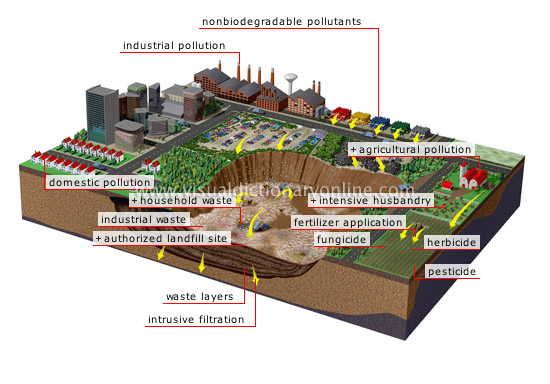
 Garbage, landfills and chemicals are the main causes of soil contamination!!! 


Look the video, write out the text and be ready to discuss the issue:


Why pollution is a such big problem today and  do you think soil pollution is an important thing for people to know about?
Everything is connected to each other. It is the circle of life


wildlife
plantssoil
which means if we have unhealthy soil, we have unhealthy plants and wildlife too. If we keep polluting like we do today, what will happen? How does soil pollution affect humans?


Everyone can make a difference and help stop soil pollution. Do you part and pick up trash in the environment?
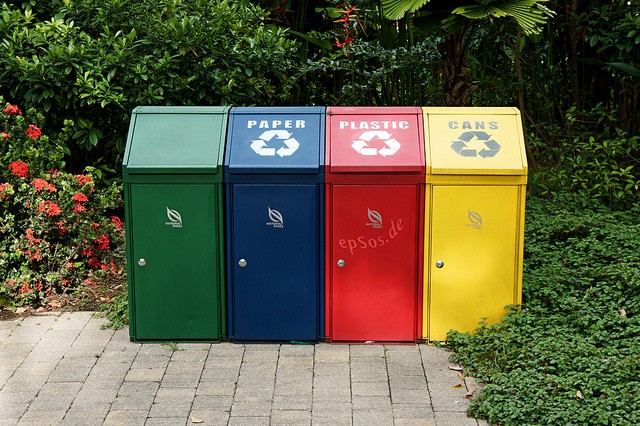
RECYCLE PAPER, PLASTIC AND CANS
OR JUST SIMPLY THROW YOUR OWN  TRASH AWAY INSTEAD OF DROPPING IT ON THE GROUND!!!


MAKE YOUR WORD MORE BEAUTIFUL!!!